Shillong, Sep 24 (IANS) The central government Friday extended the
ceasefire with the Achik National Volunteers Council (ANVC), a powerful
rebel group in Meghalaya, by another one year till Sep 30, 2012.
The decision to extend the seven-year-old tripartite truce between
the central and Meghalaya governments, and the ANVC was taken at the
Joint Monitoring Group (JMG) meeting in Delhi.
The rebel group is fighting for the creation of Garoland Territorial
Council in Meghalaya’s Garo Hills region and had entered into a
tripartite ceasefire with the central and the state governments July 23,
2004.
‘We have agreed in-principle that the ceasefire will be extended for
one year from this day,’ Joint Secretary in Home Ministry (in-charge of
North East Affairs) Shambu Singh told IANS by phone.
The JMG meeting was attended by S.K Jain, the intelligence chief of
Meghalaya Police, while the ANVC was represented by its Chief Organising
Secretary Torik Janning Marak.
Singh said the extension of ceasefire for one year from the earlier
period of three months was to ensure more dialogue with the rebel
outfit.
Former Intelligence Bureau director Pradyot Chandra Haldar is
negotiating with the ANVC on their demand for creation of a Garoland
Territorial Council, in line with Bodoland Territorial Council in Assam.
In fact, the ANVC had scaled down its demand for creation of a
separate Garoland state to an autonomous council, like the Bodoland
Territorial Council.
The ANVC, one of the five Garo rebel groups, operates in Garo Hills region and has training camps in Bangladesh.
Meghalaya shares a 443-km border with Bangladesh, part of which is
porous, hilly and unfenced and prone to frequent infiltration.
Friday, September 23, 2011

Thursday, September 22, 2011
Partial ULFA businesses in Bangladesh exposed

Zee TV's reporter Dinesh Sharma, quoting the intelligence reports revealed that ULFA commander has invested US$ 7 million for acquiring 17 percent share with Bashundhara Real Estate [East-West Properties] in Bangladesh. Bashundhara is owned by Akbar Sobhan aka Shah Alam, who owns a number of newspapers named The Daily Sun, The Kaler Kantha and The Bangladesh Protidin alongside a news agency. Bashundhara has already emerged into one of the largest business conglomerates in the country, which started business in 1984.
The same report says US$ 3 million has been invested in Jamuna Group's housing project. Jamuna Group owns a Bangla daily newspaper named Jugantor.
Other projects where the ULFA commander has been reported to have been holding shares are:
- Samit Group [owned by the Commerce Minister Lt. Col. Faruk Khan]. Investment amount US$ 2 million.
- Chowdhury Shipping owned by Salauddin Quader Chowdhury. Investment amount US$ 5 million.
- Wimfrey Chinese Restaurant. Investment amount US$ 100,000.
- Holding 30 percent shares with Samorita Hospital in Dhaka, owned by Dr. Jahid Hassan.
- Holding 30 percent shares with Kashem Textiles, through pro-Chinese political leader named AKM Maidul Islam, who is a lawmaker from Jatiyo Party in the current parliament. Jatiyo Party was formed by former military dictator Hussain Muhammed Ershand, who also is known for his China connections.
- Holding shares with One Group in Bangladesh. Invested amount US$ 2 million. This group is owned by Giasuddin Al Mamun, one of the top cronies of BNP's infamous Hawa Bhaban.
- Owning shares at Eastern Housing through Manzurul Islam Bablu. Investment amount US$ 4 million.
In 2007, US think-tank, Strategic Foresight Inc claimed that ULFA had invested US$ 6 million for at least 15 candidates belonging to both the Bangladesh Nationalist Party and the Awami League.
The Stratfor report observed that six million dollars was a "handsome contribution" coming from an Indian militant outfit, and then went on to say that the ULFA was "no ordinary organization". Its chief Paresh Barua was "an enormously wealthy racketeer worth approximately US$110 million" with business operations throughout India, Bangladesh and the Persian Gulf. The business interests, Stratfor said, included hotels, consulting firms, driving schools, tanneries, department stores, textile factories, travel agencies, investment companies, shrimp trawlers and soft drink factories. According to the think-tank, the ULFA funded its militant activities through "a sophisticated extortion network". It noted that major tea companies in Assam continuously faced pay-or-die threats, but preferred to stay quiet both out of fear as well as due to business interests.
Commenting on ULFA's exposed investment in Bangladesh, which was reveled by Zee News quoting intelligence sources, counter-terrorism specialists say, ULFA's investments have already spread in a number of projects in Bangladesh, which are yet to come into the microscope of the intelligence agencies. Largest investments of ULFA are behind some organizations and business conglomerates whose names did not appear in the lists disclosed by Zee News. ULFA is running businesses in Bangladesh ranging from florist shop to multi-national level soft drink factories. They also have significant amount behind some multi-level marketing companies in Bangladesh as well as cooperative credit societies.
The counter-terrorism specialists say, ULFA's monthly revenue accrued from the invested projects is above US$ 9-8 million, if not more. They said, the report prepared by National Security Intelligence [NSI] in Bangladesh is "biased enough", which "lacks lot more information on some of the well-known ULFA funded projects."
Red radicals oppose power projects in Arunachal Pradesh
GUWAHATI: After Assam, Maoists have entered neighbouring Arunachal Pradesh and are starting a campaign against the hundreds of hydel projects that are being planned in the state, which has a high potential for hydro power.
A top security source in Arunachal Pradesh said chief minister Jarbom Gamlin is taking a tough stand to stamp out the growth of the Maoist elements in the state.
The presence of the Maoists in the state came to light when Arunachal Pradesh police, jointly with the Army and Assam Police, nabbed as many as nine rebels from Lohit district in the neighbouring state in the past few weeks. The revelation has come as surprise for security forces, who had nabbed these people in connection with an arms-and-cash loot case that was believed to have been pulled off by Ulfa cadres.
"What we found was that these nine persons were earlier engaged by Ulfa as carriers of food, information, medicine and men. But the interrogation reveled that they are members of a Maoist organization called Upper Assam Leading Committee of the Communist Party of India (Maoist). The arrested are all from Tinsukia in Assam," the source said.
"They have already set up a network in Arunachal Pradesh, mainly in Dibang valley district bordering China. Their agenda is to provoke the locals against the power projects that have been proposed in the district. They are working over ground as anti-dam activists," the source said. Some of the biggest hydel power projects have been proposed in the Dibang valley. The construction of these projects, however, has not yet been started.
What is more worrying for the security forces is that this Maoist organization enjoys the backing of the NSCN(IM) in Tirap district of Arunachal, bordering northern Nagaland, and also has good rapport with the Paresh Baruah faction of Ulfa.
A top security source in Arunachal Pradesh said chief minister Jarbom Gamlin is taking a tough stand to stamp out the growth of the Maoist elements in the state.
The presence of the Maoists in the state came to light when Arunachal Pradesh police, jointly with the Army and Assam Police, nabbed as many as nine rebels from Lohit district in the neighbouring state in the past few weeks. The revelation has come as surprise for security forces, who had nabbed these people in connection with an arms-and-cash loot case that was believed to have been pulled off by Ulfa cadres.
"What we found was that these nine persons were earlier engaged by Ulfa as carriers of food, information, medicine and men. But the interrogation reveled that they are members of a Maoist organization called Upper Assam Leading Committee of the Communist Party of India (Maoist). The arrested are all from Tinsukia in Assam," the source said.
"They have already set up a network in Arunachal Pradesh, mainly in Dibang valley district bordering China. Their agenda is to provoke the locals against the power projects that have been proposed in the district. They are working over ground as anti-dam activists," the source said. Some of the biggest hydel power projects have been proposed in the Dibang valley. The construction of these projects, however, has not yet been started.
What is more worrying for the security forces is that this Maoist organization enjoys the backing of the NSCN(IM) in Tirap district of Arunachal, bordering northern Nagaland, and also has good rapport with the Paresh Baruah faction of Ulfa.
Wednesday, September 21, 2011
Ulfa chief has $20m in Bangla
While there has been much speculation about top Ulfa commander Paresh Baruah’s business interests in Bangladesh, Indian intelligence agencies have prepared a detailed report with graphic details about Baruah’s investments and income.
The explosive report, accessed by this newspaper, shows Baruah has investments in real estate, the health sector, textiles, shipping, power projects and restaurants.
Highly-placed intelligence sources said even Bangladesh’s Counter-Intelligence Bureau was involved in this exercise, which revealed Baruah has invested over $20 million in various companies in Bangladesh under false identities.
Of this, $14 million was pumped into three Dhaka-based real estate firms — Basundhara Real Estate, Eastern Housing Project and Jamuna Group Housing Project — under the name of Karujjaman, a London businessman. In Basundhara, Baruah has a 17 per cent stake with an investment of $7 million; while in Eastern Housing he has a nine per cent stake with an investment of $4 million; while in Jamuna he has a two per cent stake by investing $3 million.
Under the name of Jumen, a businessman from Dubai, Baruah has invested $200,000 in Samrita Hospital, Dhaka, in which he has 30 per cent. The hospital is owned by one Dr Jahid Hassan.
In Kasem Textiles, owned by AKM Maidul Islam, Baruah has a 30 per cent stake with an investment of $1.7 million. In Chowdhury Shipping he has a 30 per cent stake with an investment of $2.5 million.
Baruah also has a 40 per cent share in Dhaka’s famous Chinese restaurant, Wimfray, in which he invested $100,000. Dhaka has assured New Delhi it will crack down on these outfits.
The explosive report, accessed by this newspaper, shows Baruah has investments in real estate, the health sector, textiles, shipping, power projects and restaurants.
Highly-placed intelligence sources said even Bangladesh’s Counter-Intelligence Bureau was involved in this exercise, which revealed Baruah has invested over $20 million in various companies in Bangladesh under false identities.
Of this, $14 million was pumped into three Dhaka-based real estate firms — Basundhara Real Estate, Eastern Housing Project and Jamuna Group Housing Project — under the name of Karujjaman, a London businessman. In Basundhara, Baruah has a 17 per cent stake with an investment of $7 million; while in Eastern Housing he has a nine per cent stake with an investment of $4 million; while in Jamuna he has a two per cent stake by investing $3 million.
Under the name of Jumen, a businessman from Dubai, Baruah has invested $200,000 in Samrita Hospital, Dhaka, in which he has 30 per cent. The hospital is owned by one Dr Jahid Hassan.
In Kasem Textiles, owned by AKM Maidul Islam, Baruah has a 30 per cent stake with an investment of $1.7 million. In Chowdhury Shipping he has a 30 per cent stake with an investment of $2.5 million.
Baruah also has a 40 per cent share in Dhaka’s famous Chinese restaurant, Wimfray, in which he invested $100,000. Dhaka has assured New Delhi it will crack down on these outfits.
Tuesday, September 20, 2011
Udla militant gives police the slip
SILCHAR: A United Democratic Liberation Army (Udla) militant gave the slip to policemen when the latter were busy rescuing a kidnapped trader in the jungles near the Assam-Mizoram border on Monday night.
Sources said police arrested Subal Reang and Balaram Reang, two Udla militants, in connection with the kidnapping of Liakat Ali Barbhuiyan, a bamboo trader and resident of Matijuri locality in Hailakandi, on Monday. Barbhuiyan was whisked away at gunpoint by suspected tribal militants on September 5, when he was on his way to the remote Haticharra hamlet to pay wages to labourers. There's no news of the trader till Tuesday.
A senior police officer on Tuesday said a contingent of police, led by deputy SP (Hailakandi) Khalil Ahmed, was busy in rescue operations on Monday. Police took the help of Subal and Balaram, who accompanied them. However, Balaram managed to escape from the clutches of Katlicherra Police Station OC Shyamal Kumar Bharracharjee, who was also engaged in the operation, in the cover of darkness. Sources said Subal was involved in the kidnapping of the trader.
On the other hand, a number of NGOs, including Purbanchal Yuba Chatra Parishad, on Tuesday urged SP (Hailakandi) Hementa Bhattacharjee to ensure that Liakat Ali is rescued within the next 24 hours. They threatened to start an agitation if police failed to do so.
Udla militants are engaged in kidnapping of tea officials, traders, farmers and construction workers in the Barak Valley for the last 10 years. Recently, another Bru outfit, known as United Liberation Army of Bruland (Ulab), surfaced in the valley. In the third week of August, seven rebels of the outfit were killed in an operation with the Army in the Ratabari area of Karimganj district.
Sources said police arrested Subal Reang and Balaram Reang, two Udla militants, in connection with the kidnapping of Liakat Ali Barbhuiyan, a bamboo trader and resident of Matijuri locality in Hailakandi, on Monday. Barbhuiyan was whisked away at gunpoint by suspected tribal militants on September 5, when he was on his way to the remote Haticharra hamlet to pay wages to labourers. There's no news of the trader till Tuesday.
A senior police officer on Tuesday said a contingent of police, led by deputy SP (Hailakandi) Khalil Ahmed, was busy in rescue operations on Monday. Police took the help of Subal and Balaram, who accompanied them. However, Balaram managed to escape from the clutches of Katlicherra Police Station OC Shyamal Kumar Bharracharjee, who was also engaged in the operation, in the cover of darkness. Sources said Subal was involved in the kidnapping of the trader.
On the other hand, a number of NGOs, including Purbanchal Yuba Chatra Parishad, on Tuesday urged SP (Hailakandi) Hementa Bhattacharjee to ensure that Liakat Ali is rescued within the next 24 hours. They threatened to start an agitation if police failed to do so.
Udla militants are engaged in kidnapping of tea officials, traders, farmers and construction workers in the Barak Valley for the last 10 years. Recently, another Bru outfit, known as United Liberation Army of Bruland (Ulab), surfaced in the valley. In the third week of August, seven rebels of the outfit were killed in an operation with the Army in the Ratabari area of Karimganj district.
Monday, September 19, 2011
Burma turns hostile to Indian Separatist Groups
By Nava Thakuria
September 19, 2011
The militant outfits from Northeast India, who are operating from the jungles of northern Burma (Myanmar), have a hard time ahead. As India and Burma have strengthen its strategic relationship, it is understood that Indian separatist groups would face more attacks in Burmese soil. Moreover, it may go intensive in the next few weeks as the Burmese president Thein Sein is visiting India in October 2011.
One of the active armed groups of India, the United Liberation Front of Asom (ULFA) has admitted that their camps in Burma are facing offensives from the Burmese soldiers.
The news cannot be confirmed from the Burmese government at Nay Pie Taw, as it has little visibility in these remote areas which are in reality being ruled by the arms and drugs mafia for decades now. Of course, the version of ULFA leaders indicates that some kind of confrontations between the Burmese forces and Northeastern militant groups may be going on there.
Even the unconfirmed media reports suggested that the Burmese authority maintained its offensive against the separatist militants for many weeks and the ULFA military chief Paresh Baruah received bullet injuries.
The Sagaing division of Burma is used for shelter by many militants including the ULFA, SS Khaplang (a Burmese) led National Socialist Council of Nagaland, Manipur People's Liberation Army, UNLF and Prepak. They have nearly 300 trained cadres in their hideouts inside the jungles of northern Burma.
A recent statement from the ULFA camp revealed that their hideouts inside Burma were attacked by the government forces, but it claimed that all of their cadres escaped unhurt. Later another statement from ULFA claimed that Paresh Baruah had not received any injuries in the offensive. To prove their claims, the statement added a photograph of the illusive ULFA leader. It is the second photograph of Paresh Baruah, which has been released by the militant outfit itself in the last few months. The Indian intelligence has reportedly no recent photographs of Paresh Baruah except some pix taken in Bhutan camps before December 2003. The email statement, issued by Paresh Baruah’s close associate Arunoday Dahotiya went on alleging that that the Indian central government in New Delhi had paid a huge amount of arms and money to the Burmese regime to go offensive against the ULFA militants.
Mentionable is that the Indian government had recently supplied 52 military trucks load of arms and ammunition to the Burmese government. India maintained its strategic and military relationship with the Burmese regime even after receiving brickbats from the international community. Expressing resentment at New Delhi's continued military relationship with Nay Pie Taw, hundreds of pro-democracy Burmese activists and various Indian civil society groups demonstrated in New Delhi on July 22, 2011 arguing that 'supplying arms to the most brutal military dictatorship may have grave consequences to millions of innocent lives'.
The demonstrators also sent a memorandum to Indian Prime Minister Dr. Manmohan Singh urging him to renew New Delhi's support the Burmese people's movement for restoration of peace and democracy in Burma. Till the early nineties, Indian government supported the democratic movement led by Daw Aung San Suu Kyi. But later it changed the course and started engaging the then military regime named State Peace and Development Council for various bi-lateral relationships.
"We believe that India is a nation founded on sound democratic principles and time and again India has proven to uphold the principles of constitutionally elected governments. Further as a nation committed to playing an important, if not pivotal role in maintaining peace in the region, it is unbecoming of a responsible nation to supply arms to countries known for abusing military power," stated the memorandum, which was signed by nearly hundred Indian civil society groups and individuals with many Burmese organizations. The ULFA, which was born in 1979 to make Assam independent out of India three decades back, today is a divided house, as its chairman Arabinda Rajkhowa with his followers have joined in the peace process with New Delhi. However, ULFA’s commander-in-chief Paresh Baruah continues sticking to the primary demand for a Swadhin Asom. The notorious leader is understood to leave Bangladesh recently and now stay somewhere in Burma-China border areas, where from he and his followers are maintaining their so-called armed struggle.
Arunoday Dahotiya’s mail clearly claimed that New Delhi ‘paid a special economic package worth as high as Indian Rupees 20,000 crores to flush out the rebel camps’ from the Burmese soil. Additionally, the Burmese government is offered (by Indian government) Rs 100 crore to kill Paresh Baruah’ within this September, added the statement. It had more to add that New Delhi maintained the practice (to pay neighboring countries in need) since long back. The Indian government paid Rs 1000 crore package to Bhutan to destroy ULFA, following which Thimphu flushed out the ULFA camps inside south Bhutan in December 2003, Arunoday Dahotiya claimed.
The Indian government had recently offered money to the Bangladesh government led by Awami League chief Sheikh Hasina with a request to take actions against the ULFA leaders and cadres taking shelter in that country. Accordingly, Dhaka handed over many militant leaders (including ULFA chairman Arabinda Rajkhowa to Indian authority. Though India and Bangladesh doesnot have an extradition treaty, the Bangladesh authority arrested the militant leaders and secretly handed over to India. No official statement was issued by the Bangladesh government on the matter and even the Bangladeshi newspapers had to depend on India’s media to report about the important issue.
September 19, 2011
The militant outfits from Northeast India, who are operating from the jungles of northern Burma (Myanmar), have a hard time ahead. As India and Burma have strengthen its strategic relationship, it is understood that Indian separatist groups would face more attacks in Burmese soil. Moreover, it may go intensive in the next few weeks as the Burmese president Thein Sein is visiting India in October 2011.
One of the active armed groups of India, the United Liberation Front of Asom (ULFA) has admitted that their camps in Burma are facing offensives from the Burmese soldiers.
The news cannot be confirmed from the Burmese government at Nay Pie Taw, as it has little visibility in these remote areas which are in reality being ruled by the arms and drugs mafia for decades now. Of course, the version of ULFA leaders indicates that some kind of confrontations between the Burmese forces and Northeastern militant groups may be going on there.
Even the unconfirmed media reports suggested that the Burmese authority maintained its offensive against the separatist militants for many weeks and the ULFA military chief Paresh Baruah received bullet injuries.
The Sagaing division of Burma is used for shelter by many militants including the ULFA, SS Khaplang (a Burmese) led National Socialist Council of Nagaland, Manipur People's Liberation Army, UNLF and Prepak. They have nearly 300 trained cadres in their hideouts inside the jungles of northern Burma.
A recent statement from the ULFA camp revealed that their hideouts inside Burma were attacked by the government forces, but it claimed that all of their cadres escaped unhurt. Later another statement from ULFA claimed that Paresh Baruah had not received any injuries in the offensive. To prove their claims, the statement added a photograph of the illusive ULFA leader. It is the second photograph of Paresh Baruah, which has been released by the militant outfit itself in the last few months. The Indian intelligence has reportedly no recent photographs of Paresh Baruah except some pix taken in Bhutan camps before December 2003. The email statement, issued by Paresh Baruah’s close associate Arunoday Dahotiya went on alleging that that the Indian central government in New Delhi had paid a huge amount of arms and money to the Burmese regime to go offensive against the ULFA militants.
Mentionable is that the Indian government had recently supplied 52 military trucks load of arms and ammunition to the Burmese government. India maintained its strategic and military relationship with the Burmese regime even after receiving brickbats from the international community. Expressing resentment at New Delhi's continued military relationship with Nay Pie Taw, hundreds of pro-democracy Burmese activists and various Indian civil society groups demonstrated in New Delhi on July 22, 2011 arguing that 'supplying arms to the most brutal military dictatorship may have grave consequences to millions of innocent lives'.
The demonstrators also sent a memorandum to Indian Prime Minister Dr. Manmohan Singh urging him to renew New Delhi's support the Burmese people's movement for restoration of peace and democracy in Burma. Till the early nineties, Indian government supported the democratic movement led by Daw Aung San Suu Kyi. But later it changed the course and started engaging the then military regime named State Peace and Development Council for various bi-lateral relationships.
"We believe that India is a nation founded on sound democratic principles and time and again India has proven to uphold the principles of constitutionally elected governments. Further as a nation committed to playing an important, if not pivotal role in maintaining peace in the region, it is unbecoming of a responsible nation to supply arms to countries known for abusing military power," stated the memorandum, which was signed by nearly hundred Indian civil society groups and individuals with many Burmese organizations. The ULFA, which was born in 1979 to make Assam independent out of India three decades back, today is a divided house, as its chairman Arabinda Rajkhowa with his followers have joined in the peace process with New Delhi. However, ULFA’s commander-in-chief Paresh Baruah continues sticking to the primary demand for a Swadhin Asom. The notorious leader is understood to leave Bangladesh recently and now stay somewhere in Burma-China border areas, where from he and his followers are maintaining their so-called armed struggle.
Arunoday Dahotiya’s mail clearly claimed that New Delhi ‘paid a special economic package worth as high as Indian Rupees 20,000 crores to flush out the rebel camps’ from the Burmese soil. Additionally, the Burmese government is offered (by Indian government) Rs 100 crore to kill Paresh Baruah’ within this September, added the statement. It had more to add that New Delhi maintained the practice (to pay neighboring countries in need) since long back. The Indian government paid Rs 1000 crore package to Bhutan to destroy ULFA, following which Thimphu flushed out the ULFA camps inside south Bhutan in December 2003, Arunoday Dahotiya claimed.
The Indian government had recently offered money to the Bangladesh government led by Awami League chief Sheikh Hasina with a request to take actions against the ULFA leaders and cadres taking shelter in that country. Accordingly, Dhaka handed over many militant leaders (including ULFA chairman Arabinda Rajkhowa to Indian authority. Though India and Bangladesh doesnot have an extradition treaty, the Bangladesh authority arrested the militant leaders and secretly handed over to India. No official statement was issued by the Bangladesh government on the matter and even the Bangladeshi newspapers had to depend on India’s media to report about the important issue.
India: Trouble At The Margins In Assam – Analysis
By Veronica Khangchian
On August 19, 2011, Security Forces (SFs) killed seven United Democratic Liberation Army (UDLA) militants at Gutguti Pathargenai forest under Ratabari Police Station in the Karimganj District of Assam, bringing this little known group into sharp focus. An Army soldier was also injured during the gunfight, while one UDLA cadre was arrested.
Earlier on May 16, 2011, SFs had arrested UDLA the ‘commander-in-chief’, identified as Nandaram Reang, and his bodyguard, Gajiram Reang, from the forest area of Kundanala in the Katlicherra Block of Hailakandi District. Further, on April 29, 2011, SFs had arrested an UDLA militant from Channighat in Assam’s Cachar District.
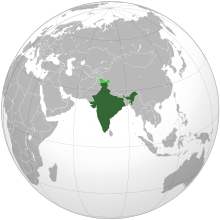 On September 24, 2009, Police in the neighbouring Mizoram State had
arrested the UDLA ‘chairman’, Dhainaram Reang, from Kolasib District in
Mizoram, and handed him over to the Hailakandi District Police. He,
however, managed to secure bail and later escaped into the Mizoram
forests. The UDLA was led by Shishumoni Reang, brother of Dhainaram
Reang, while he was in Police custody.
On September 24, 2009, Police in the neighbouring Mizoram State had
arrested the UDLA ‘chairman’, Dhainaram Reang, from Kolasib District in
Mizoram, and handed him over to the Hailakandi District Police. He,
however, managed to secure bail and later escaped into the Mizoram
forests. The UDLA was led by Shishumoni Reang, brother of Dhainaram
Reang, while he was in Police custody.
Formed sometime in 2008 by Dhainaram Reang, the UDLA has an estimated 50 to 60 cadres, drawn from both the Bru and Bengali Muslim community. The outfit primarily operates in Assam’s Southern Districts of Karimganj and Hailakandi – bordering Mizoram, Tripura and Bangladesh.
UDLA was formed when the United Liberation Front of Barak Valley (ULFBV) came overground with the formal surrender of 305 of its cadres at the Indian Tea Association (ITA) Cultural Complex in Guwahati on September 30, 2008. The ULFBV ‘president’ Panchram Apeto led the surrendering cadres, mostly of them from the Reang tribe of Hailakandi and Karimganj Districts, ending an eight-year-old armed insurrection. Panchram had then claimed that Dhainaram had a hidden nexus with some Muslim militants. Denying this, an UDLA ‘commander’, Rajesh Reang, declared, on September 24, 2010, that his group has close links with Naga militants. He claimed that UDLA’s headquarters were in Bangladesh and that the outfit had been collecting money from various tea gardens in the Karimganj and Hailakandi Districts.
Later, on an unspecified date, a section of UDLA split and formed the United Democratic Liberation Front-Barak (UDLF-B), led by one Danya Ram Reang, along with Lamboo Reang. As in the case of UDLA, UDLF-B has also been brought under tremendous pressure by the SFs.
On April 29, 2011, SFs arrested an ‘area commander’ of UDLF-B, Thaiboi Reang, from Kundanala village in Hailakandi District. Thaiboi Reang was involved in cases of abduction and extortion since the inception of the group. On July 28, 2011, SFs arrested a UDLF-B militant from Katlicherra in Hailakandi District. On April 28, 2010, two cadres of the UDLF-B were arrested from Alagapur in Hailakandi District, when they were trying to extort money in the Algapur market.
The UDLA split again when Atabur Rahman, once an accomplice of Dhainaram, formed his own outfit, the United Democratic Liberation Tigers (UDLT), on December 3, 2009. The rift occurred reportedly because of soured relations between the Bru and the Muslim communities following incidents of UDLA cadres abducting a number of Muslims from Hailakandi District in 2009. Atabur, who vowed to protect the Muslims from Bru militants, was, however, killed on January 11, 2011, in Mizoram, either by rivals or the SFs, along with his cousin and accomplice, Eklasuddin. The UDLT, though, has been described as a group of dacoits and abductors.
Bru militancy started with the formation of the Bru National Liberation Front (BNLF) in 1996, following violent clashes between ethnic Mizos and Bru tribesmen in the Mamit District in Mizoram. The immediate cause of the conflict was the demand for an Autonomous District Council (ADC) in the Bru-dominated areas of western Mizoram by the Bru National Union (BNU), a political organisation of Bru tribesmen that was formed in 1994. The Reang/Bru Democratic Convention Party (RDCP), another Bru organisation, passed a resolution in this regard, subsequently provoking Mizo organisations like the Mizo Zirlai Pawl (MZP) and Young Mizo Association (YMA) to organise violent attacks in October 1997 on Bru settlements. The Mizo groups apprehended the geographical division of Mizoram. Following the ethnic-violence of 1997, some 35,000 Bru refugees fled Mizoram and took shelter in six relief camps at Kanchanpur in North Tripura, while a significant number fled to Assam. Bru militants have, thereafter, changed their demands to include the formation of a separate homeland in Karimganj and Hailakandi Districts of Assam.
The ULFBV, formed in 2002, was specifically created with the objective of creating a separate Bru homeland in the Karimganj and Hailakandi Districts of Assam. However, on April 26, 2011, the UDLA ‘chairman’ stated that the group was contemplating surrender if the Government was ready to constitute a separate Autonomous Council for the Bru community.
Meanwhile, the repatriation of Bru refugees to Mizoram has emerged as a major concern. Repatriation started in May 2010, for the first time, and a total of 231 displaced Bru families consisting of 1,115 persons, returned to Mizoram. The second phase of repatriation occurred in November 2010, in which another 53 Bru families returned to Mizoram. The third phase began in April 2011 and continued till May, with more than 600 families restored to Mizoram. The fourth phase, which was to begin from June 7, 2011, failed to take off. The stalled repatriation process was reported likely to be resumed from September 15, 2011, but has not yet commenced.
Despite significant losses, UDLA and its splinter groups continue to operate and, over the past two years, UDLA alone has been involved in the killing of at least three civilians in two separate incidents:
July 17, 2011: Suspected UDLA militants shot dead a member of the Bru community, identified as Birguram, branding him a Police informer, in Thinglian village of Kolasib District in Mizoram.
September 18, 2010: UDLA militants attacked the managerial staff of Dullavcherra Tea Estate in Karimganj District, killing two employees.
Meanwhile, on September 8, 2011, UDLA militants attacked the hamlets of Bagmara, Banglabasa, Gandacherra, Baruncherra, Haticherra, Harincherra, Sontila and Jhumtila, forcing people of their own tribe to flee or shift to other places. The Bru militants have been moving about in this area, threatening people to leave the places, possibly to sanitize their own safe havens in the forests.
The group has also been involved in several incidents of abduction and extortion. On June 6, 2011, UDLA militants abducted two executives of a road construction company, Anupam Bricks and Concrete Industries Limited (ABCIL), from Kolasib District in Mizoram, reportedly demanding a ransom of INR 50 million. The Mizoram Police, however, rescued both the executives after an encounter at Banglabasha village in Hailakandi District on June 16, 2011, and no ransom was paid. On April 20, 2011, a small-time businessman, Zakir Hussain Laskar, was abducted by UDLA militants from Hailakandi District. Earlier after the September 18, 2010, killing of two managerial staff of the Dullavcherra Tea Estate, UDLA threatened, on September 24, 2010, that it would continue such attacks until the garden management pays INR 1.5 million, as demanded. On December 21, 2010, UDLA stepped up extortion by issuing notices demanding INR 300 per household in Hailakandi, Dullavcherra and Karimganj Districts, threatened villagers with dire consequences for failure to comply.
Meanwhile, on May 11, 2011, UDLF-B abducted an assistant manager of the Dullavcherra Tea Estate in Karimganj District. He was, however, released at Betcherra in Katlicherra block of Hailakandi District on May 20, 2011. There is no official confirmation of any ransom paid to the abductors, but intelligence sources disclosed that INR 200,000 was paid to ensure his safe release.
Since the formation of UDLA, there have been 16 recorded incidents of killings, abductions and arrests, in which Bru militant outfits have been found involved. Of these, UDLA was connected with nine incidents, UDLF-B with four, United Liberation Army of Bruland (ULAB) with two, and United Liberation Army (ULA) with one incident.
There are seven Bru groups in the region. Significantly, however, three of them, the BNLF, Bru Liberation Front of Mizoram (BLFM) and ULFBV have surrendered. 195 BNLF militants, including the outfit’s ‘president’ Surjya Moni Reang and ‘general secretary’ Solomon Prophul Ushoy, surrendered at the Sidan transit camp in West Tuipuibari on July 25, 2005. Further, 802 BLFM cadres surrendered before the Mizoram Government on October 26, 2006. ULFBV surrendered arms on September 30, 2008. Very little is heard about ULA and ULAB, which leaves the UDLA and its splinter UDLF-B as the only two Bru militant outfits still operational.
The SFs have intensified operations and secured significant successes against most of the militant groups operating elsewhere in the State as well, as is evident by the decreasing fatalities, With both UDLA and UDLF-B under sustained fire, it is unlikely that these groups will retain their capacities for disruption and violence for long.
Veronica Khangchian
Research Associate, Institute for Conflict Management
On August 19, 2011, Security Forces (SFs) killed seven United Democratic Liberation Army (UDLA) militants at Gutguti Pathargenai forest under Ratabari Police Station in the Karimganj District of Assam, bringing this little known group into sharp focus. An Army soldier was also injured during the gunfight, while one UDLA cadre was arrested.
Earlier on May 16, 2011, SFs had arrested UDLA the ‘commander-in-chief’, identified as Nandaram Reang, and his bodyguard, Gajiram Reang, from the forest area of Kundanala in the Katlicherra Block of Hailakandi District. Further, on April 29, 2011, SFs had arrested an UDLA militant from Channighat in Assam’s Cachar District.
India
Formed sometime in 2008 by Dhainaram Reang, the UDLA has an estimated 50 to 60 cadres, drawn from both the Bru and Bengali Muslim community. The outfit primarily operates in Assam’s Southern Districts of Karimganj and Hailakandi – bordering Mizoram, Tripura and Bangladesh.
UDLA was formed when the United Liberation Front of Barak Valley (ULFBV) came overground with the formal surrender of 305 of its cadres at the Indian Tea Association (ITA) Cultural Complex in Guwahati on September 30, 2008. The ULFBV ‘president’ Panchram Apeto led the surrendering cadres, mostly of them from the Reang tribe of Hailakandi and Karimganj Districts, ending an eight-year-old armed insurrection. Panchram had then claimed that Dhainaram had a hidden nexus with some Muslim militants. Denying this, an UDLA ‘commander’, Rajesh Reang, declared, on September 24, 2010, that his group has close links with Naga militants. He claimed that UDLA’s headquarters were in Bangladesh and that the outfit had been collecting money from various tea gardens in the Karimganj and Hailakandi Districts.
Later, on an unspecified date, a section of UDLA split and formed the United Democratic Liberation Front-Barak (UDLF-B), led by one Danya Ram Reang, along with Lamboo Reang. As in the case of UDLA, UDLF-B has also been brought under tremendous pressure by the SFs.
On April 29, 2011, SFs arrested an ‘area commander’ of UDLF-B, Thaiboi Reang, from Kundanala village in Hailakandi District. Thaiboi Reang was involved in cases of abduction and extortion since the inception of the group. On July 28, 2011, SFs arrested a UDLF-B militant from Katlicherra in Hailakandi District. On April 28, 2010, two cadres of the UDLF-B were arrested from Alagapur in Hailakandi District, when they were trying to extort money in the Algapur market.
The UDLA split again when Atabur Rahman, once an accomplice of Dhainaram, formed his own outfit, the United Democratic Liberation Tigers (UDLT), on December 3, 2009. The rift occurred reportedly because of soured relations between the Bru and the Muslim communities following incidents of UDLA cadres abducting a number of Muslims from Hailakandi District in 2009. Atabur, who vowed to protect the Muslims from Bru militants, was, however, killed on January 11, 2011, in Mizoram, either by rivals or the SFs, along with his cousin and accomplice, Eklasuddin. The UDLT, though, has been described as a group of dacoits and abductors.
Bru militancy started with the formation of the Bru National Liberation Front (BNLF) in 1996, following violent clashes between ethnic Mizos and Bru tribesmen in the Mamit District in Mizoram. The immediate cause of the conflict was the demand for an Autonomous District Council (ADC) in the Bru-dominated areas of western Mizoram by the Bru National Union (BNU), a political organisation of Bru tribesmen that was formed in 1994. The Reang/Bru Democratic Convention Party (RDCP), another Bru organisation, passed a resolution in this regard, subsequently provoking Mizo organisations like the Mizo Zirlai Pawl (MZP) and Young Mizo Association (YMA) to organise violent attacks in October 1997 on Bru settlements. The Mizo groups apprehended the geographical division of Mizoram. Following the ethnic-violence of 1997, some 35,000 Bru refugees fled Mizoram and took shelter in six relief camps at Kanchanpur in North Tripura, while a significant number fled to Assam. Bru militants have, thereafter, changed their demands to include the formation of a separate homeland in Karimganj and Hailakandi Districts of Assam.
The ULFBV, formed in 2002, was specifically created with the objective of creating a separate Bru homeland in the Karimganj and Hailakandi Districts of Assam. However, on April 26, 2011, the UDLA ‘chairman’ stated that the group was contemplating surrender if the Government was ready to constitute a separate Autonomous Council for the Bru community.
Meanwhile, the repatriation of Bru refugees to Mizoram has emerged as a major concern. Repatriation started in May 2010, for the first time, and a total of 231 displaced Bru families consisting of 1,115 persons, returned to Mizoram. The second phase of repatriation occurred in November 2010, in which another 53 Bru families returned to Mizoram. The third phase began in April 2011 and continued till May, with more than 600 families restored to Mizoram. The fourth phase, which was to begin from June 7, 2011, failed to take off. The stalled repatriation process was reported likely to be resumed from September 15, 2011, but has not yet commenced.
Despite significant losses, UDLA and its splinter groups continue to operate and, over the past two years, UDLA alone has been involved in the killing of at least three civilians in two separate incidents:
July 17, 2011: Suspected UDLA militants shot dead a member of the Bru community, identified as Birguram, branding him a Police informer, in Thinglian village of Kolasib District in Mizoram.
September 18, 2010: UDLA militants attacked the managerial staff of Dullavcherra Tea Estate in Karimganj District, killing two employees.
Meanwhile, on September 8, 2011, UDLA militants attacked the hamlets of Bagmara, Banglabasa, Gandacherra, Baruncherra, Haticherra, Harincherra, Sontila and Jhumtila, forcing people of their own tribe to flee or shift to other places. The Bru militants have been moving about in this area, threatening people to leave the places, possibly to sanitize their own safe havens in the forests.
The group has also been involved in several incidents of abduction and extortion. On June 6, 2011, UDLA militants abducted two executives of a road construction company, Anupam Bricks and Concrete Industries Limited (ABCIL), from Kolasib District in Mizoram, reportedly demanding a ransom of INR 50 million. The Mizoram Police, however, rescued both the executives after an encounter at Banglabasha village in Hailakandi District on June 16, 2011, and no ransom was paid. On April 20, 2011, a small-time businessman, Zakir Hussain Laskar, was abducted by UDLA militants from Hailakandi District. Earlier after the September 18, 2010, killing of two managerial staff of the Dullavcherra Tea Estate, UDLA threatened, on September 24, 2010, that it would continue such attacks until the garden management pays INR 1.5 million, as demanded. On December 21, 2010, UDLA stepped up extortion by issuing notices demanding INR 300 per household in Hailakandi, Dullavcherra and Karimganj Districts, threatened villagers with dire consequences for failure to comply.
Meanwhile, on May 11, 2011, UDLF-B abducted an assistant manager of the Dullavcherra Tea Estate in Karimganj District. He was, however, released at Betcherra in Katlicherra block of Hailakandi District on May 20, 2011. There is no official confirmation of any ransom paid to the abductors, but intelligence sources disclosed that INR 200,000 was paid to ensure his safe release.
Since the formation of UDLA, there have been 16 recorded incidents of killings, abductions and arrests, in which Bru militant outfits have been found involved. Of these, UDLA was connected with nine incidents, UDLF-B with four, United Liberation Army of Bruland (ULAB) with two, and United Liberation Army (ULA) with one incident.
There are seven Bru groups in the region. Significantly, however, three of them, the BNLF, Bru Liberation Front of Mizoram (BLFM) and ULFBV have surrendered. 195 BNLF militants, including the outfit’s ‘president’ Surjya Moni Reang and ‘general secretary’ Solomon Prophul Ushoy, surrendered at the Sidan transit camp in West Tuipuibari on July 25, 2005. Further, 802 BLFM cadres surrendered before the Mizoram Government on October 26, 2006. ULFBV surrendered arms on September 30, 2008. Very little is heard about ULA and ULAB, which leaves the UDLA and its splinter UDLF-B as the only two Bru militant outfits still operational.
The SFs have intensified operations and secured significant successes against most of the militant groups operating elsewhere in the State as well, as is evident by the decreasing fatalities, With both UDLA and UDLF-B under sustained fire, it is unlikely that these groups will retain their capacities for disruption and violence for long.
Veronica Khangchian
Research Associate, Institute for Conflict Management
Subscribe to:
Posts (Atom)